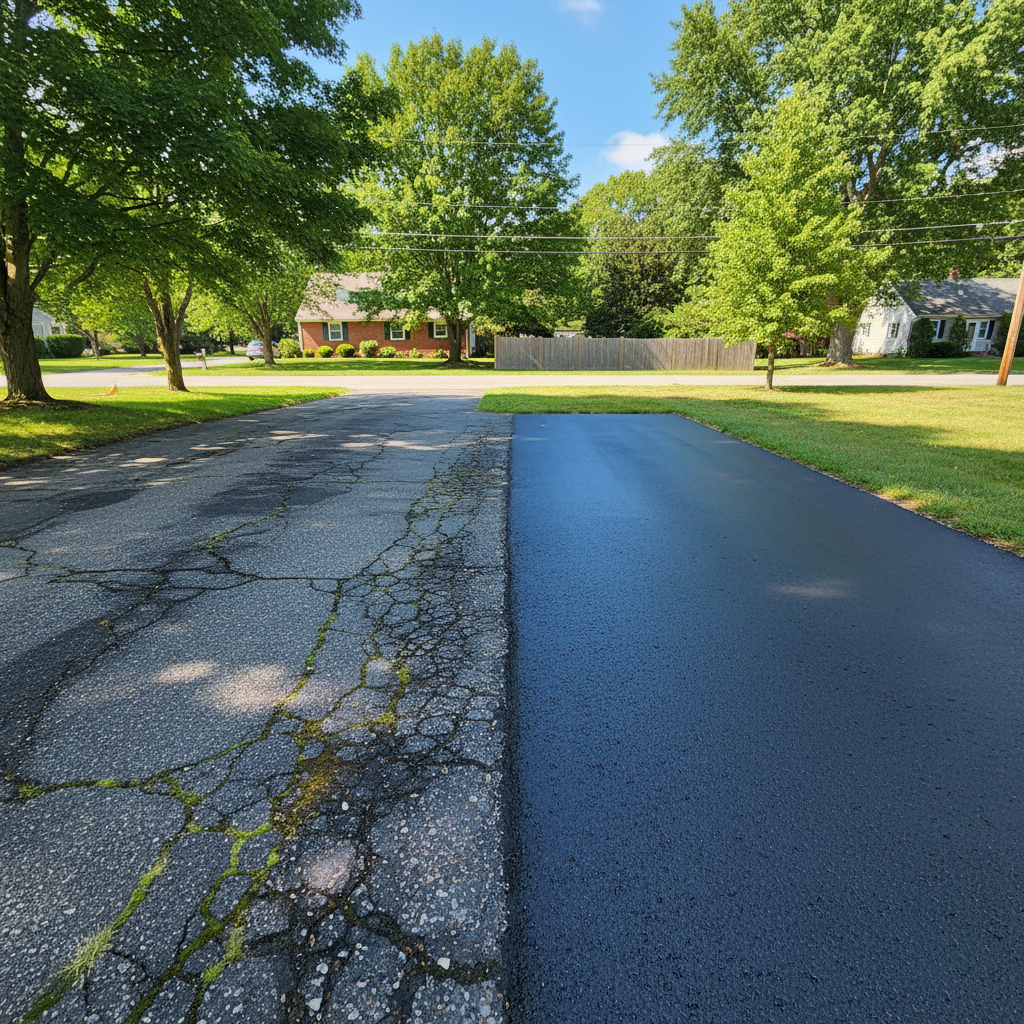
Alright, so you're staring at your driveway, maybe thinking it's time for some sealcoating. Good idea. It's honestly one of the best things you can do to protect your asphalt and keep it looking sharp for years to come. But once you start digging into it, you'll probably hear about two main ways to get that sealant down: spraying it on or squeegeeing it. What's the real difference, and which one should you pick?
The Spray Method: Quick and Clean?
First off, let's talk about spraying. This is what you often see with bigger crews, or when someone's trying to get a job done fast. They'll use a special sprayer to get the sealcoat on your driveway, aiming for an even layer. Think of it like painting, but with a really powerful hose.
The biggest upside here is speed, no doubt. A crew can cover a large area pretty darn quickly. If you've got a huge driveway, maybe one of those long ones winding up to a house in the Diamond District, spraying can definitely cut down on labor time. It also tends to give a super uniform, smooth finish – if the person operating the sprayer actually knows what they're doing, that is. It looks clean, almost like a fresh coat of paint.
But here's the kicker with spraying: coverage. It's easy for someone less experienced to put the material on too thin. If it's too thin, you're just not getting the protection you think you are. Sure, it might look nice and black, but the actual protective layer won't be tough enough to stand up to our Lynn winters, with all that freezing and thawing. Overspray is another big headache. If they're not careful, you could end up with black sealant on your garage door, your foundation, or even your prize-winning hydrangeas. It's a real pain to clean up, and sometimes you just can't get it off completely.
The Squeegee Method: Hands-On Protection
Now, let's get to the squeegee method. This is more of a traditional, hands-on approach. The crew pours the sealcoat right onto the asphalt, then uses a big rubber squeegee to spread it around, really working it into the pavement. It takes more effort, absolutely.
The main benefit of squeegeeing is how well it penetrates and how thick it goes on. When you're pushing that material with a squeegee, you're literally forcing it down into the tiny cracks and pores of the asphalt. This gives you a much better bond and a thicker, more durable protective layer. It fills those microscopic voids that spraying might just skim over. For a driveway that's seen a few years of wear and tear, or one with some minor surface imperfections, this method often gives you way better protection.
Because it's applied with more pressure, you also tend to get a more consistent, heavier application. This means better UV protection from the sun and better resistance to water, oil, and gas spills. It's just a tougher coat, plain and simple. The downside? It takes longer, and it usually costs a bit more in labor. Sometimes, if the asphalt is really rough, the finish might not be quite as perfectly smooth as a sprayed surface, but that's usually barely noticeable, and the trade-off for durability is totally worth it.
Cost, Durability, and Appearance
- Cost: Generally, spraying can be a little cheaper upfront because it's faster. Squeegeeing might cost a bit more because of the extra labor. But remember, cheaper isn't always better in the long run.
- Durability: Squeegee wins here, hands down. The thicker, more deeply penetrated coat just holds up better against our New England weather. Think about the heavy snow, the salt trucks, and the constant freeze-thaw cycles we get in Lynn. A thin, sprayed coat just won't cut it for as long.
- Appearance: A well-done spray job can look incredibly smooth and uniform right after it's applied. A squeegee job will also look fantastic, a deep rich black, but you might see very subtle texture differences from the squeegee marks if you look super close. Both look great when done right, but the squeegee method usually keeps that fresh look longer because it's more durable.
What I Recommend for Lynn Homeowners
Look, I've been doing this for a long time at Oasis Asphalt, and I've seen countless driveways all over Lynn – from the triple-deckers in the Highlands to the newer builds near the waterfront. For most homeowners, especially with the kind of weather we deal with here in Massachusetts, I'm going to lean towards the squeegee method.
Why? Because it gives you the best protection and the longest-lasting results. You're not just getting a pretty black top; you're getting a robust shield for your asphalt. It penetrates deeper, provides a thicker coat, and stands up better to the harsh elements. You'll spend a little more upfront, yes, but you'll get more years out of your sealcoat. That means you'll save money in the long run by not having to reapply as often or deal with premature cracking and deterioration.
When you're sealing your driveway, you want to make sure the job is done right, not just fast or cheap. You want that sealant to really bond and protect. And that's what the squeegee method delivers. It's a more thorough, more effective way to extend the life of your asphalt driveway. Don't just take my word for it; ask around. Most experienced contractors who really care about quality will tell you the exact same thing.